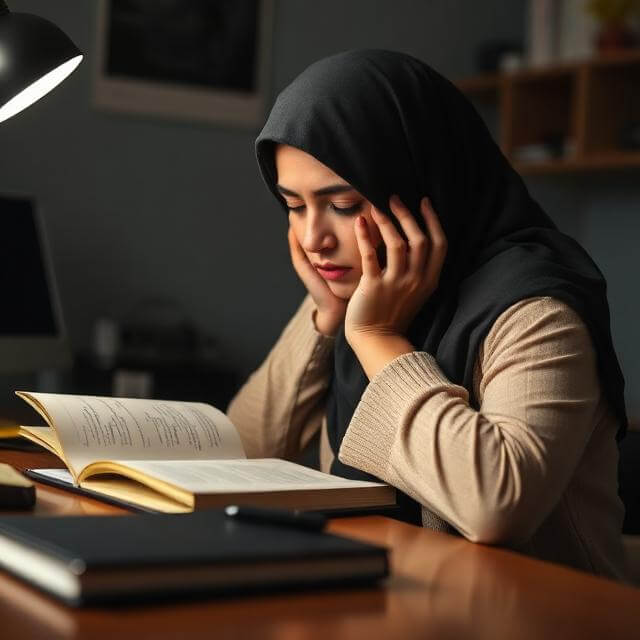
There is a particular kind of exhaustion that comes from carrying a weight no one has named. Many Muslim women in the US, UK, and Canada know it well: the pressure to be a devoted daughter, a good wife, a practicing Muslim, and a successful professional, all at once, while managing grief, anxiety, or depression that the community still struggles to openly acknowledge.
Muslim women's mental health occupies a space that is both underresearched and underserved. Research from Northwestern University and Stanford's Muslim Mental Health and Islamic Psychology Lab confirms that Muslim women in America experience compounded stressors that place them at significantly elevated risk for depression, anxiety, and trauma responses, yet they seek professional support at far lower rates than the general population.
This article unpacks why that gap exists, what Muslim women are actually carrying, and how faith-aligned therapy is helping women reclaim their wellbeing without compromising their identity.
The Layers No One Talks About
The mental health pressures facing Muslim women are not a single thing. They are a stack.
Visibility and discrimination
For Muslim women who wear hijab, identity is visible in every public space. Research published in the Journal of Counseling Psychology found that this visibility, combined with being the only visibly Muslim person in a given environment, is independently linked to heightened psychological distress.
Islamophobia does not stop at awareness: discrimination in professional settings, microaggressions in daily life, and the vigilance required to navigate both create a chronic, low-level stress that accumulates over time.
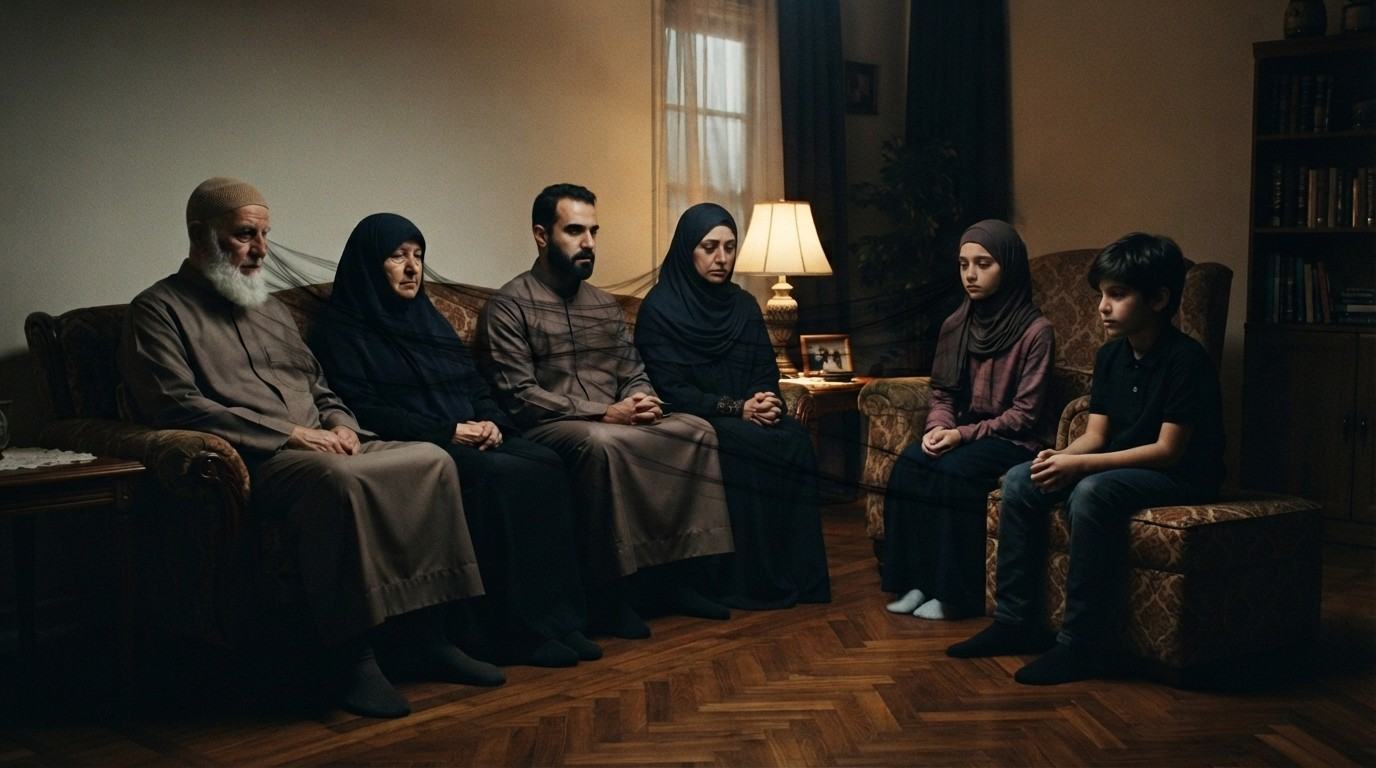
Family honor and the weight of sharaf
Across many Muslim cultures, women are understood to represent the family's honor. Research on Muslim mental health help-seeking consistently identifies this as a barrier to care: women are less likely to disclose emotional struggles, seek therapy, or accept a diagnosis when doing so might reflect on the family.
The fear is not imagined. It is shaped by lived experience of how communities respond when a woman's mental health becomes visible.
The performance of strength
A recurring theme in clinical literature is emotional suppression among Muslim women, rooted in cultural expectations of resilience. Sabr, patience, is a genuine Islamic virtue. But when it is applied to silence suffering rather than to support someone through it, it becomes a barrier.
Many Muslim women report being told, by family and community alike, to pray more, to be grateful, to push through. The message, however unintentionally, is that needing help is a failure of faith.
Intergenerational tension and dual identity
For second-generation Muslim women navigating Western societies, identity is rarely settled. Clinical research highlights the psychological burden that emerges when Western norms and family or religious expectations pull in different directions. This is not an abstract tension. It shows up in therapy as anxiety about marriage decisions, career choices, questions of dress, and belonging in communities where you are never quite Muslim enough or quite Western enough.
A study of 1,214 Muslim women in the US published in Mental Health, Religion and Culture found significant variation in barriers to professional mental healthcare across ethnic groups, but shared patterns across all groups: rejection attitudes toward therapy, fear of community stigma, and limited familiarity with what professional support actually involves.
A separate analysis confirmed that Muslim women express higher levels of need for mental health services but also face steeper barriers to accessing them. The gap between need and care is not accidental. It is structural.
Privacy is a central concern. Seeking therapy can feel like a public disclosure. Attending a session means someone may see you enter a clinic. Using insurance creates a paper trail. For women whose wellbeing is tied to family reputation, these are not small obstacles.
Online therapy has changed this meaningfully. A private session from home, with a therapist who understands Islamic values and the specific pressures Muslim women face, removes many of these barriers at once.
What Faith-Aligned Therapy Actually Looks Like
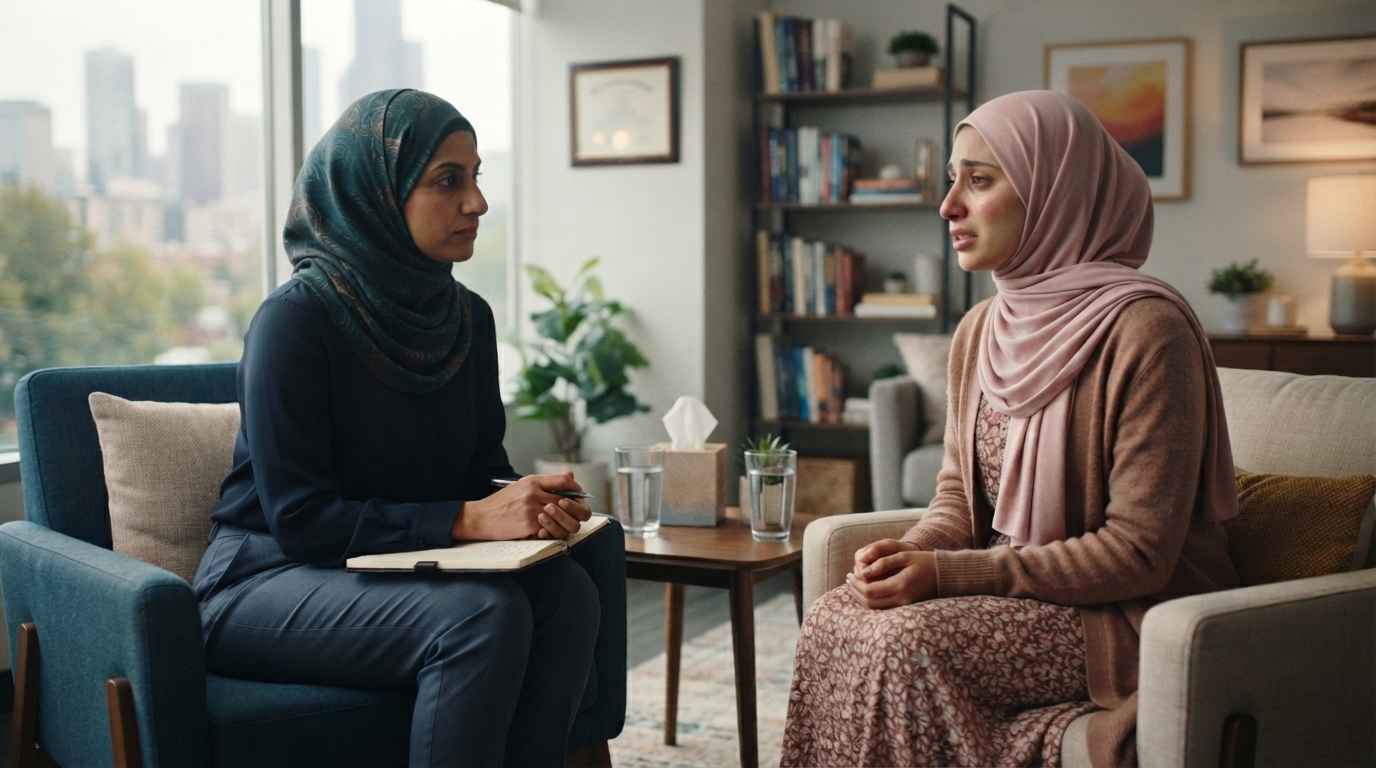
Faith-aligned therapy does not ask you to choose between your religion and your mental health. It starts from the understanding that both matter and that they are not in conflict.
For Muslim women, this means working with a therapist who understands the emotional weight of cultural expectations, who will not ask you to abandon your values or explain your identity from scratch, and who can integrate Islamic concepts, tawakkul, community, the role of dua, into the therapeutic process in a clinically grounded way.
Evidence-based approaches including cognitive behavioral therapy, acceptance and commitment therapy, and trauma-focused therapies can all be applied within a culturally informed frame. The goal is not to reshape your identity. It is to help you carry your life with more steadiness and less pain.
Signs It May Be Time to Talk to Someone
You do not need to be in crisis to benefit from therapy. Many Muslim women who work with Shifa therapists describe years of managing well on the surface while quietly struggling underneath. Some things to pay attention to:
Persistent low mood or anxiety that does not lift, even with prayer and rest. Feeling disconnected from people around you, or from your own sense of self. Anger or irritability that feels disproportionate to what triggered it. Physical symptoms such as sleep disruption, fatigue, or unexplained pain. A sense that you are performing okayness rather than actually experiencing it.
None of these are character flaws. They are signs that your nervous system is under strain and that some support could help.
FAQ
Is therapy appropriate for Muslim women according to Islam?
There is no Islamic ruling against therapy. Many scholars support seeking professional help for mental distress, in the same way they would support seeing a doctor for physical illness. Islam encourages seeking knowledge and healing.
Will my family know I am seeing a therapist?
No. All Shifa Therapy sessions are completely private and confidential. Nothing is disclosed to your family, employer, or community. Sessions are conducted online and appear on card statements as a neutral descriptor.
Can I request a female therapist?
Yes. When you complete the matching questionnaire, you can specify a preference for a female therapist. We will match you accordingly.
What if I am not sure whether what I am experiencing is serious enough for therapy?
That uncertainty is itself a reason to speak with someone. An initial session is a conversation, not a diagnosis. You decide what you want to explore and at what pace.
Is therapy halal?
Yes. Licensed therapy is widely accepted as permissible in Islam. Our therapists understand Islamic values and you will never be asked to do or discuss anything that conflicts with your faith.