Key Takeaways
- Feeling lonely in your marriage is common and does not mean weak faith or a failed marriage.
- Wanting emotional closeness with your spouse is natural, and Islam describes it as part of marriage’s purpose.
- Being patient does not mean hiding your loneliness from your spouse. Telling them how you feel is the first step.
- Small steps rebuild closeness: say “I miss talking with you,” set aside daily time together, and practice gratitude and forgiveness.
- Reach out for support if the loneliness lasts for months or you feel numb or hopeless.
- Therapy can help even if your spouse does not want to attend.
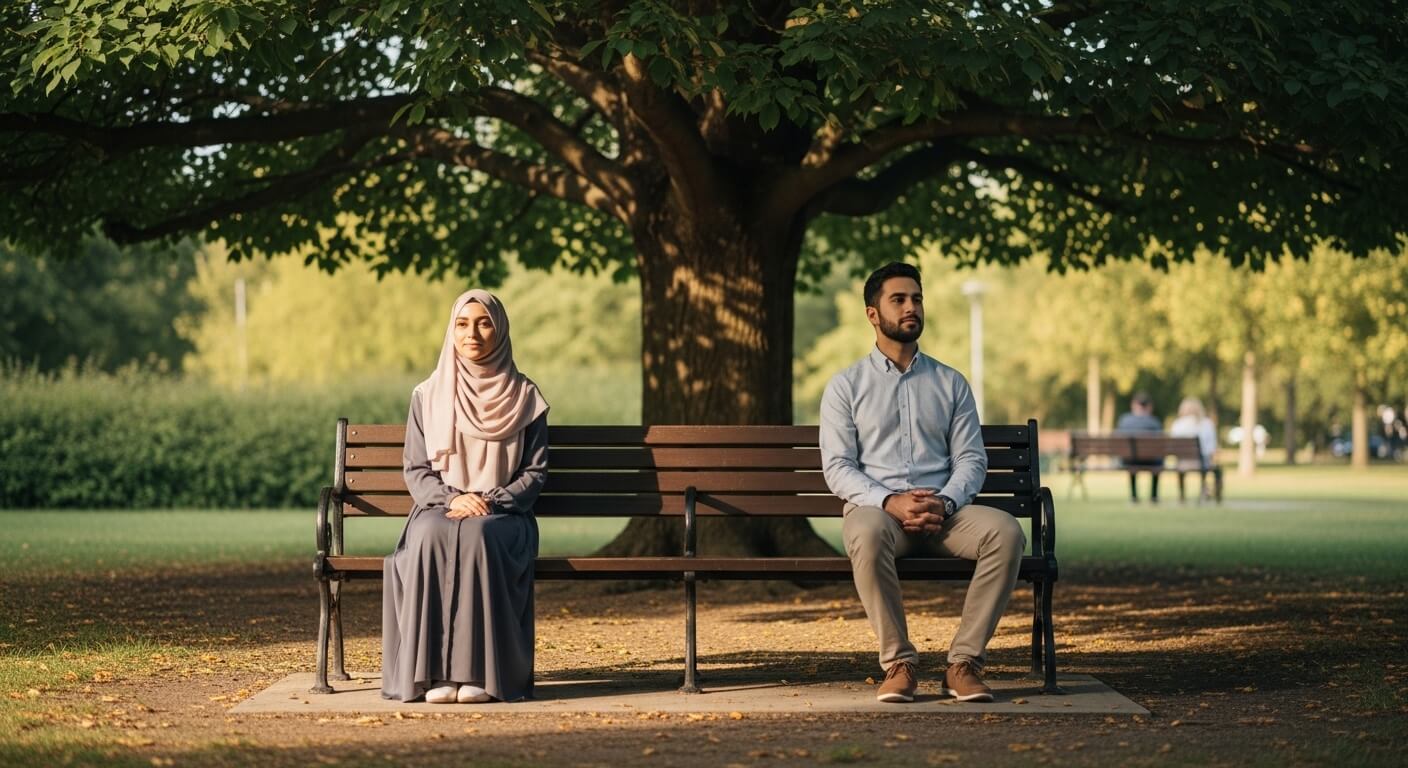
You share a home, a family, and a last name. Yet some evenings you sit across from your spouse and feel completely alone. You talk about schedules, bills, and the kids, but not about how you are really doing.
If that sounds familiar, you are not ungrateful, and you are not alone in this. Feeling lonely in your marriage is a real and common experience. Many Muslim husbands and wives carry it quietly because they worry it says something about their faith or their spouse.
This guide looks at what marital loneliness is, what Islam teaches about companionship, and how you can begin to reconnect. It also explains when talking to a Muslim marriage counselor can help.
What Does Loneliness in Marriage Feel Like?
Emotional loneliness is not about being physically alone. It is the gap between being near someone and feeling close to them. People often describe it in similar ways:
- You feel unheard when you try to share something that matters.
- You tell friends or family your news before you tell your spouse.
- Conversations stay on logistics, and affection feels routine or missing.
- You feel more like roommates or co-parents than partners.
- You miss the person you married, or the way things used to feel.
This is more common than most couples admit. A research paper on loneliness in intimate relationships, published in the PMC archive, cites earlier findings that about 20% of wives and 24% of husbands are significantly lonely. It also notes that depression tends to rise as loneliness inside a marriage increases.
Why Do You Feel Lonely When You Are Not Alone?
Marital loneliness rarely has one cause. It usually builds slowly, through ordinary seasons of life that nobody planned for.
- Busy seasons. A new baby, a demanding job, or caring for aging parents can leave little energy for each other.
- Unspoken expectations. Each spouse may be waiting for the other to notice what they need.
- Difficulty talking about feelings. Many of us grew up learning to keep emotions private, so we never practiced saying them out loud.
- Family and cultural pressure. In-laws, community expectations, and the idea that problems stay inside the home can make honest conversation feel risky.
- Old hurts. Unresolved arguments and patterns we absorbed in childhood can create distance. Our article on generational trauma in Muslim families explores how these patterns travel.
- Mental health. Low mood or anxiety can make closeness harder for one or both partners. Support for depression or anxiety often helps the marriage too.
What Does Islam Teach About Companionship in Marriage?
The Quran speaks directly to the need for closeness. In Surah Ar-Rum (30:21), Allah describes spouses as a sign of His mercy. He created them so that you may find tranquility (sakinah) in each other, and placed between you love (mawaddah) and mercy (rahmah). You can read the verse and its commentary on Quran.com.
Notice what this says. Emotional rest and warmth are not extras in an Islamic marriage. They are part of its purpose. Wanting to feel close to your spouse is not selfish or a lack of gratitude. It is what the verse describes.
Surah Al-Baqarah (2:187) uses another image, describing spouses as garments for one another. A garment is close, protective, and covers what is vulnerable. That is a picture of trust and safety, not distance.
The Prophet Muhammad (peace be upon him) also set a standard for how spouses treat each other. He said that the best of you is the one who is best to his family, and that he himself was the best to his family (Jami at-Tirmidhi 3895). Good character is measured first at home.
Classical commentators have suggested that mawaddah often feels easy in the early years, while rahmah is the deliberate choice of gentleness when life gets hard. If warmth has faded, that does not mean the marriage is broken. It may mean it is time to choose rahmah on purpose, and to get help doing it.
Is It Wrong to Feel Lonely in Your Marriage?
No. Loneliness is a signal, not a sin. It is not proof of weak faith, and it does not mean you are failing as a husband or wife.
Many people hold back because they have heard that sabr (patience) means staying quiet. But sabr is not silence about pain. Islamic sources record the Prophet (peace be upon him) listening to marital concerns and offering guidance, which shows that bringing difficulties into the open has a place in our tradition.
The same is true of tawakkul (trust in Allah). The well-known teaching to tie your camel and then trust in Allah reminds us that trust and action go together. Dua is a source of strength, and therapy is one of the practical steps you can take alongside it. They complement each other.
What Are the Signs You May Need More Support?
Every marriage has quiet stretches. It may be worth reaching out for support if:
- The loneliness has lasted for months and is getting heavier.
- You avoid conversations because they always end the same way.
- You feel numb, resentful, or hopeless about the relationship.
- You notice low mood, constant worry, or trouble sleeping.
- One of you carries most of the emotional or household load.
None of these means the marriage is over. They simply tell you that you and your spouse deserve more support than you are getting right now.
How Can You Begin to Reconnect?
Small, steady steps often work better than one big conversation. Here are some places to start.
- Name the feeling without blame. Try "I miss talking with you" instead of "You never listen." It invites your spouse in rather than putting them on guard.
- Pick a calm moment. Avoid raising it in the middle of an argument or when you are both exhausted.
- Build one small daily ritual. Ten minutes of tea without phones, a short walk after Isha, or praying together can rebuild a sense of "us."
- Practice gratitude and forgiveness. A study of couples, summarized by PsyPost, found that gratitude and forgiveness softened the link between loneliness and lower relationship satisfaction for both husbands and wives. For a faith-based view, see our guide to forgiveness in Islam.
- Make dua together. Ask Allah for mawaddah and rahmah in your home, and say it out loud so your spouse hears it.
- Look after yourself. Keep up friendships and routines that nourish you. Choose carefully who you confide in so your privacy is protected.
Progress may be slow, and that is normal. Be patient with both of you.
How Can Muslim Marriage Counseling Help?
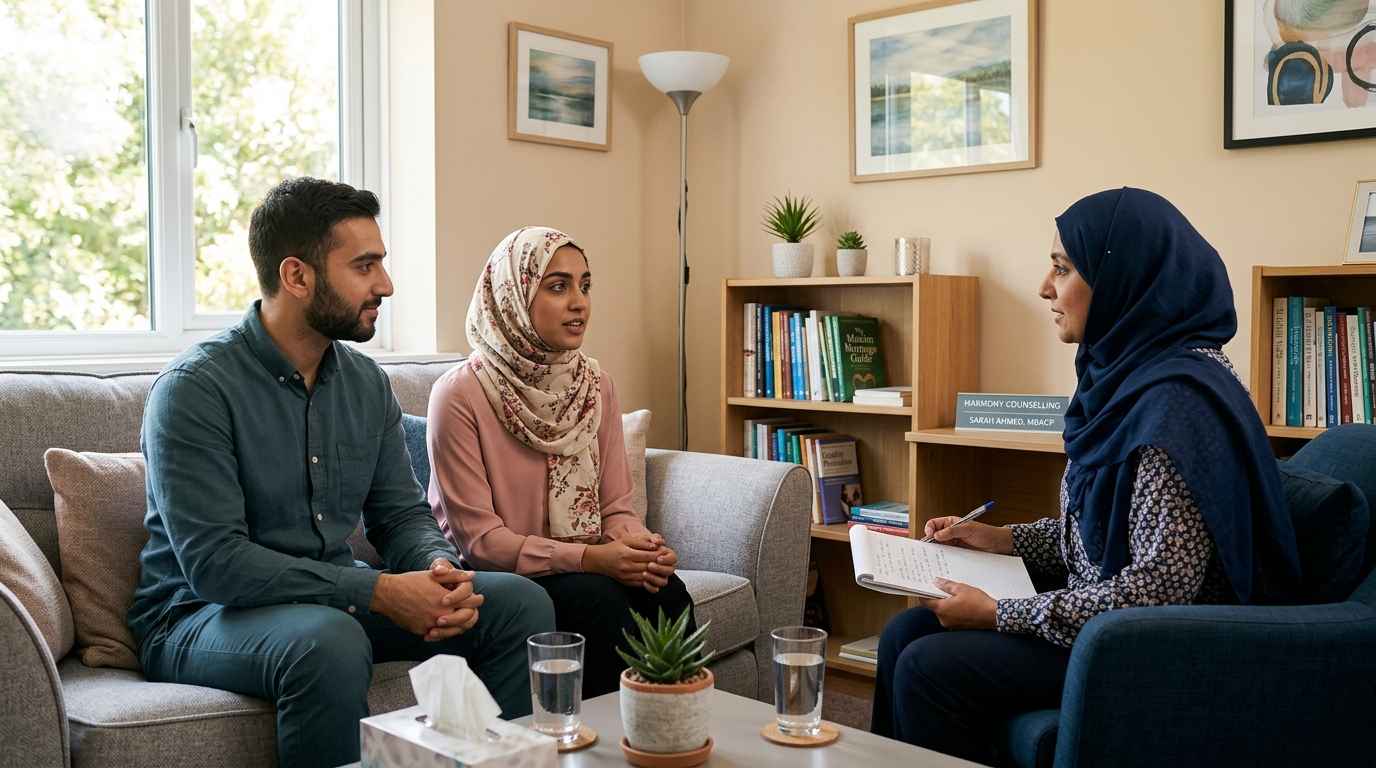
Couples therapy gives you a structured, safe space to say what has gone unsaid. A therapist can help you understand the pattern you are stuck in, communicate needs more clearly, and rebuild closeness at a pace that feels right.
Shifa Therapy therapists use approaches such as Emotionally Focused Therapy, attachment-based therapy, and CBT, with Islamic values woven in where you want them. A Muslim therapist already understands the context around you, from family expectations to concerns about privacy, so you do not have to explain it all first. In fact, 89% of Muslims say they prefer therapists who respect their Islamic beliefs.
Your sessions are completely private and confidential. No one is notified, not your family, employer, or community. You can browse Muslim therapists by language, gender, and concern, or start with Muslim marriage counseling.
What If Your Spouse Does Not Want to Attend?
This is very common. Therapy for one person can still make a real difference. Individual sessions help you process what you feel, practice new ways of speaking, and decide what you need.
Often, when one partner changes how they show up, the dynamic shifts. Some spouses later feel ready to join. Invite them gently, using "I" language, and avoid pressure. If your loneliness is tied to divorce worries, our article on divorce grief in Islam may also help.
Frequently Asked Questions
Is it normal to feel lonely in a marriage?
Yes. Research suggests that a meaningful share of married people feel lonely, and it is closely tied to how supported and understood they feel by their spouse. Feeling this way does not mean your marriage has failed.
Does feeling lonely mean my iman is weak?
No. Loneliness is a human emotion. The Quran itself presents tranquility and closeness as one of the purposes of marriage, so wanting them is natural. Faith and seeking help can go hand in hand.
Is seeking marriage counseling accepted in Islam?
Yes. Islamic tradition encourages resolving marital difficulties with wisdom and kindness, and many scholars and community organizations support counseling. Choosing a therapist who respects your values helps you stay comfortable and grounded in your faith.
Can therapy help if only I want to work on the marriage?
Yes. Individual therapy can help you communicate differently, process your feelings, and make clearer decisions. Your spouse may choose to join later.