Key Takeaways
- Interfaith marriage is common: 39% of Americans married since 2010 have a spouse from a different religious group.
- Most conflict centers on daily practice, extended family and children.
- Decisions about raising children are easier to make early, before they become urgent.
- Pressure to convert, from a spouse or family, tends to deepen resentment.
- A therapist who understands Muslim values can help both of you feel heard without pushing either of you toward a particular outcome.
Interfaith marriage brings significant challenges that can wear a couple down when they go unspoken.
Quick Answer
The most common interfaith marriage challenges are differences in religious practice, family pressure, decisions about raising children and pressure to convert. Couples therapy gives both spouses a neutral space to talk through these issues and agree on shared values, with a therapist who respects each person's beliefs.
What Counts as an Interfaith Marriage
An interfaith marriage is a marriage between spouses from different religious backgrounds. In Muslim communities, that often means a Muslim married to a Christian, Jewish or nonreligious spouse. It also includes couples where one spouse converted to Islam and their family follows another faith. Many of the same pressures show up when spouses practice at very different levels, even within the same faith.
These marriages are more common than many people assume. According to Pew Research Center, 39% of Americans who married since 2010 have a spouse in a different religious group, compared with 19% of those who married before 1960. Among Muslims, 79% of those who are married or living with a partner are with someone of the same faith, which means about 1 in 5 are with someone of another faith or none.
Questions about the religious status of your marriage are best taken to a scholar you trust. Therapy focuses on how the two of you communicate and make decisions together.
Common Interfaith Marriage Challenges
Most interfaith couples recognize at least a few of these.
Different Views on Daily Practice
Faith shows up in small daily choices, like prayer times, fasting in Ramadan, halal food at home or whether alcohol is kept in the house. When one spouse sees these as essential and the other sees them as optional, small moments can turn into repeated arguments. Over time, both of you may start to feel judged in your own home.
Family Pressure and Acceptance
Parents and relatives often carry their own fears about an interfaith marriage. Some worry their grandchildren will lose the family's faith. Others feel embarrassed in front of their community. You may feel caught between loyalty to your family and loyalty to your spouse, while your spouse feels like an outsider at every family gathering.
Raising Children
For many couples, children are where differences become most urgent. Which faith will they learn? Will they attend weekend Islamic school, Sunday school or both? Research has found that roughly 1 in 5 U.S. adults were raised in interfaith homes. Of those, 48% now follow their mother's religion, 28% their father's and 24% neither.
Talking about these choices early gives you time to decide together, before an aqiqah, a baptism or a school enrollment forces the question.
Holidays and Celebrations
Eid, Christmas, Passover and Diwali can bring joy and tension in the same season. Questions like whose family you visit and which traditions your children join can reopen old wounds every year.
Pressure to Convert
Sometimes one spouse, or their family, hopes the other will convert. Even gentle hints can leave a partner feeling loved only on condition. The Quran states that "there shall be no compulsion in religion" (2:256), and many couples find it helps to name the pressure openly so it stops sitting between them.
Feeling Alone in Your Community
Interfaith couples sometimes feel unwelcome at the masjid or in their spouse's place of worship. That isolation can push stress back into the marriage, because you each become the other's only support.
An Islamic Perspective on Mercy in Marriage
The Quran describes marriage as a source of calm: "And of His signs is that He created for you from yourselves mates that you may find tranquility in them; and He placed between you affection and mercy" (30:21). Mawaddah (affection) and rahmah (mercy) offer a useful guide for how you treat each other during hard conversations, especially when you disagree about faith.
Signs It's Time for Couples Therapy
It may help to speak with a therapist if:
- The same argument about faith keeps repeating without progress.
- You avoid topics like children or holidays to keep the peace.
- Family pressure is affecting how you feel about each other.
- One of you feels judged or unwelcome in your own home.
- You're facing a big decision, such as having children or moving closer to family.
If your spouse isn't ready to join yet, you can still talk to a Muslim therapist online on your own. Individual sessions can help you get clear on what you need before you bring it to your spouse.
How Therapy Supports Mixed-Faith Couples
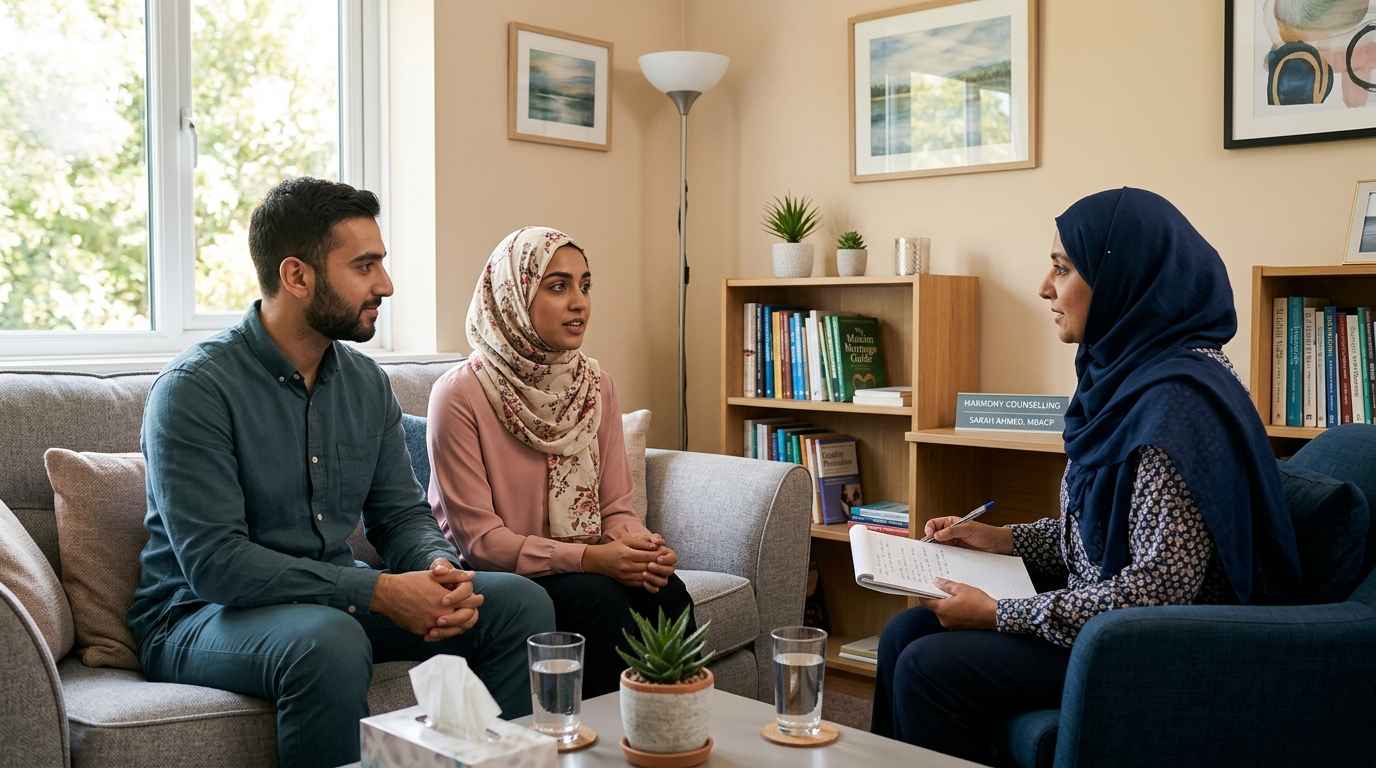
Interfaith marriage counseling gives both of you a neutral space where neither faith is treated as the problem. In Muslim couples therapy, your therapist can help you:
- Understand what each practice means to your spouse, beyond the rule itself.
- Separate core values from preferences, so you know where you can flex.
- Build a shared plan for children and holidays.
- Set boundaries with extended family that you both agree on.
- Repair after hurtful arguments and rebuild trust.
Approaches such as emotionally focused therapy and the Gottman Method help couples slow down conflict and respond to each other with more care. Your therapist won't ask either of you to give up your beliefs or push you toward a particular outcome. Sessions are online and private, so you can talk openly from home.
Practical Steps You Can Start Today
- Talk About Values Before Rules. Ask each other what your faith gives you, such as comfort or a sense of belonging. Shared values are easier to build on than lists of dos and don'ts.
- Name What Matters Most. Each of you picks 2 or 3 practices that matter most. Knowing these helps you protect what is essential and stay flexible on the rest.
- Decide About Children Early. Discuss religious education and schooling before the decisions become urgent.
- Present a United Front With Family. Agree on boundaries privately, then have each spouse speak to their own family.
- Use Calm Communication. Speak from your own experience and take a break when things get heated.
- Make Room for Both Traditions. Find ways to honor each other's important days, even if you mark them differently.
For more on this, read our marital communication tips for Muslim couples.
FAQ
Can Therapy Help an Interfaith Marriage?
Yes. Couples therapy helps you talk through faith differences and agree on shared values with a neutral guide.
Will a Muslim Therapist Pressure My Spouse to Convert?
No. A good therapist respects both partners' beliefs and does not push either of you toward a particular outcome.
How Do Interfaith Couples Decide How to Raise Children?
Most couples do best when they discuss religious education early and agree on a plan together.
Is It Normal to Feel Torn Between My Family and My Spouse?
Yes. Many people in interfaith marriages feel this, and therapy can help you set boundaries that protect your marriage.
Can I Go to Therapy Without My Spouse?
Yes. Individual therapy can help you understand your own needs before you bring them to your spouse.
Should I Ask a Therapist About Islamic Rulings on Interfaith Marriage?
Questions about religious rulings are best taken to a qualified scholar, while therapy focuses on your relationship.
Therapists who specialize in this
We couldn't load therapists right now.
Looking for Support?
Connect with a licensed therapist specialized in these areas.


Ready to Start Your Therapy Journey?
Connect with a licensed therapist who understands your needs — fully online and confidential.