Key Takeaways
- Many Muslim men struggle quietly. Saying "I'm fine" does not mean you are.
- In men, distress often shows up as anger, withdrawal, overwork or constant tiredness, not obvious sadness.
- About 3 in 10 Muslim men (28%) have ever seen a mental health professional, according to ISPU's 2025 poll.
- Islam does not ask you to hide pain. The Prophet (peace be upon him) wept for his son and called it mercy.
- Therapy fits with faith. Dua, sabr and tawakkul work alongside professional support, not instead of it.
- One honest sentence to someone you trust is a real first step.
Only 28% of Muslim men in the US have ever seen a mental health professional, according to ISPU's 2025 poll. That does not mean the rest are fine. For many, it means they have never found a safe way to say they are struggling.
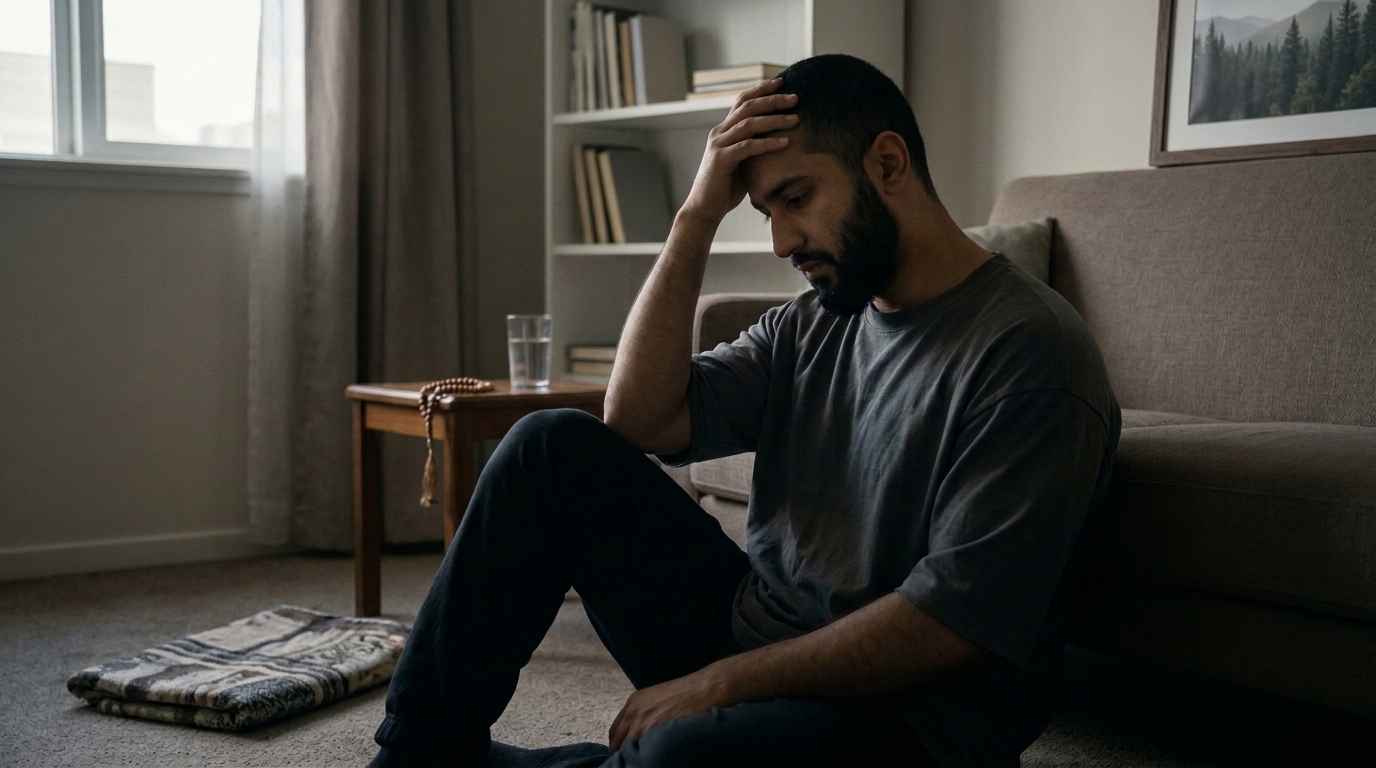
Mental health in Muslim men often stays hidden behind duty and strength. Many carry stress, low mood, anger or worry they have never said out loud, because they fear speaking up will look like weak faith or weak character.
It does not. This guide covers what the struggle can look like, why so many men stay silent, what Islam teaches about strength, and how to take a first step with a Muslim therapist.
What Does a Mental Health Struggle Look Like in Muslim Men?
Men often do not say "I feel depressed." Distress tends to come out sideways. These are common patterns:
- Irritability or anger that feels out of proportion
- Pulling away from family, friends or the masjid
- Working longer and longer hours to avoid being alone with your thoughts
- Constant tiredness, headaches, stomach problems or poor sleep
- Losing interest in things you used to enjoy
- Feeling numb, empty or on edge
- Relying on alcohol, gaming or scrolling to switch off
These signs can point to depression, anxiety, burnout or unprocessed trauma. A licensed therapist can help you work out which one you are dealing with.
If you notice several of these for more than a couple of weeks, take them seriously. If you ever have thoughts of ending your life, call or text 988 in the US right away.
Why Do Muslim Men Stay Silent About Their Struggles?
Silence is rarely a sign of weakness. It is usually something men learn early.
- The provider role. Many men grow up believing their job is to carry everyone else, not to be carried.
- "Be a man." Boys hear it young, and it often means swallow it and carry on.
- Fear of judgment. Worry about what the community will say, or whether struggling means weak iman.
- No words for it. Many of us were never taught how to name a feeling.
- Misreading faith. The belief that sabr means staying quiet, or that dua alone should be enough.
The numbers show the gap. ISPU's 2025 American Muslim Poll found that 32% of American Muslims have ever visited a mental health professional, up from 25% in 2019. Among Muslim men the figure was 28%, compared with 36% of Muslim women.
A 2026 qualitative study of Muslims in Liverpool interviewed 11 adults and described men as especially held back by norms that equate asking for help with weakness. One participant said, "Men are often told to just be men and ignore it." It is a small study, but the pattern matches what many therapists hear.
What Does Islam Say About Strength and Struggle?
Islam never asks a man to hide his pain. When the Prophet's son Ibrahim was dying, the Prophet (peace be upon him) wept. A companion asked if even he was crying, and he replied, "O son of Awf, this is mercy." He added that the eyes shed tears and the heart grieves (Sahih al-Bukhari 1303).
If the best of men could grieve openly, no man needs to be ashamed of feeling. Strength in Islam is about patience, character and taking responsibility, and that includes looking after yourself.
The Quran says Allah does not burden a soul beyond what it can bear (Quran 2:286). If you feel close to that limit, it is a signal to reach for support, not a failure. The Prophet (peace be upon him) also taught that Allah sent down a cure for every disease (Sahih al-Bukhari 5678).
Sabr is steady endurance, not silence. Tawakkul is trust in Allah together with effort.
Ready to Talk to a Muslim Therapist?
Book your session at Shifa Therapy. It is confidential, online, and culturally informed. You can choose a male therapist if you prefer.
How Does It Affect Marriage and Family?
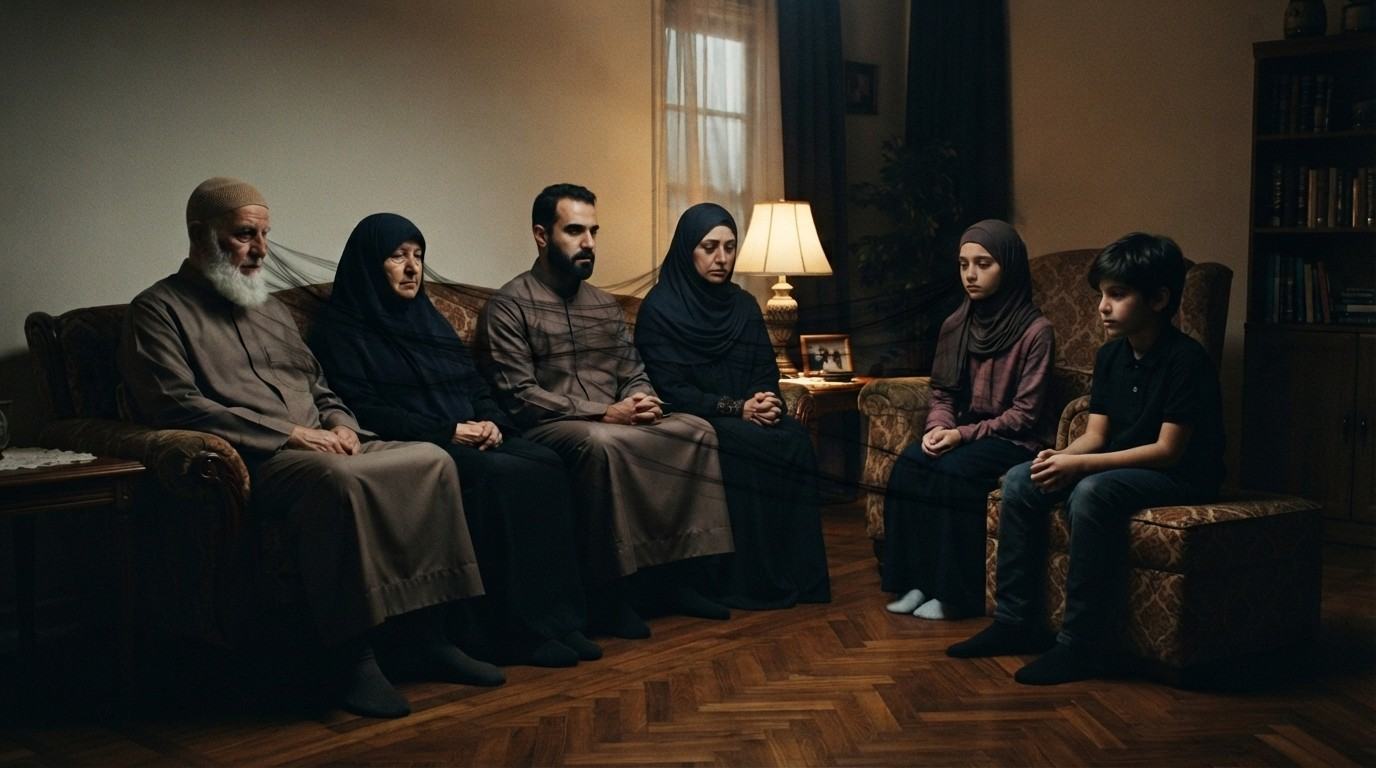
When a man struggles in silence, the people closest to him often feel it first. A spouse may feel the distance, and children may feel the short temper. Both can leave the family guessing about what went wrong.
Individual therapy can help you, and Muslim marriage counseling can help you and your spouse reconnect.
What Can You Do Today?
Small steps work better than a big breakthrough. Start with one of these.
- Name it in one sentence. For example: "I have been under a lot of pressure and I am not okay."
- Tell one person you trust. A friend, a brother, your spouse or an imam you feel safe with.
- Check the basics. Look at your sleep, food, movement and time outside.
- Keep your spiritual routine. Salah, dhikr and dua are real sources of comfort. Add professional support alongside them.
- Cut back on numbing habits. Notice what you reach for to switch off, and try to reduce it.
- Book one session. You are only committing to one conversation.
Progress can be slow. Be as patient with yourself as you would be with a brother.
How Does Therapy Help Muslim Men?
Therapy gives you a private space to say what you cannot say anywhere else. A therapist helps you understand what is going on, build tools to manage it, and decide what you want to change.
- Private. Sessions are online, from your phone or laptop, wherever you feel comfortable.
- Your choice. Filter by therapist gender, language and concern when you browse Muslim therapists.
- Evidence-based. Therapists use approaches such as CBT, ACT and Emotionally Focused Therapy.
- Faith on your terms. Islamic values are woven in as much or as little as you want.
How Can Family and Friends Support a Muslim Man?
- Listen first. Do not rush to fix it.
- Skip lines like "be strong" or "just make dua." They can sound like dismissal.
- Ask directly: "You seem tired lately. How are you really?"
- Offer to help him find a therapist, or sit with him while he books.
- Check in again a week later. One conversation is rarely enough.
Frequently Asked Questions
Is it normal for Muslim men to feel depressed or anxious?
Yes. Depression and anxiety affect men of every background and level of practice. They are health conditions, not a judgment on your character or your iman.
Does struggling with mental health mean my faith is weak?
No. The Prophet (peace be upon him) wept openly and called it mercy. Feeling pain is human, and seeking help is consistent with trusting Allah.
Is it okay for a Muslim man to see a therapist?
Yes. Seeking professional care fits with Islamic teaching, just as treating any illness does.
Can I choose a male Muslim therapist?
Yes. When you browse therapists, you can filter by gender, language and the concern you want to work on.
Therapists who specialize in this
We couldn't load therapists right now.
Looking for Support?
Connect with a licensed therapist specialized in these areas.

Ready to Start Your Therapy Journey?
Connect with a licensed therapist who understands your needs — fully online and confidential.